Butterfly Milkweed
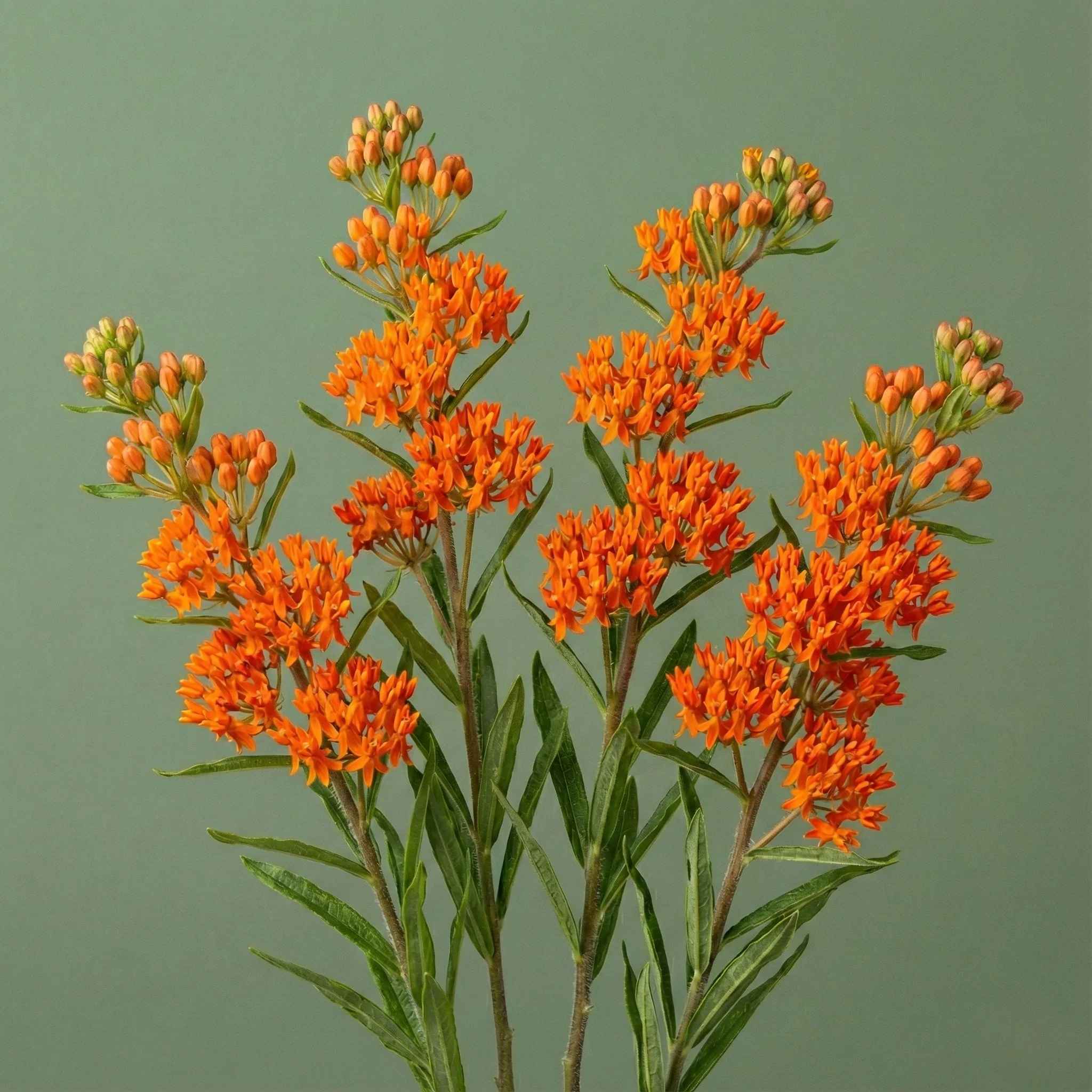
Butterfly Milkweed (Asclepias tuberosa) is a hardy, drought-tolerant perennial native to the central and eastern United States. Found naturally in dry, open areas, it thrives in full sun and well-drained soils. This compact species grows 18 to 30 inches tall and produces clusters of vibrant orange to reddish-orange flowers that attract pollinators all summer long.
Unlike other milkweed species, Butterfly Milkweed is non-aggressive and forms tidy clumps, making it perfect for borders, wildflower gardens, and pollinator habitats. It serves as both a nectar source for bees and butterflies and a host plant for Monarch caterpillars, supporting the complete Monarch life cycle.
Original: $3.99
-65%$3.99
$1.40More Images

Butterfly Milkweed
Butterfly Milkweed (Asclepias tuberosa) is a hardy, drought-tolerant perennial native to the central and eastern United States. Found naturally in dry, open areas, it thrives in full sun and well-drained soils. This compact species grows 18 to 30 inches tall and produces clusters of vibrant orange to reddish-orange flowers that attract pollinators all summer long.
Unlike other milkweed species, Butterfly Milkweed is non-aggressive and forms tidy clumps, making it perfect for borders, wildflower gardens, and pollinator habitats. It serves as both a nectar source for bees and butterflies and a host plant for Monarch caterpillars, supporting the complete Monarch life cycle.
Product Information
Product Information
Shipping & Returns
Shipping & Returns
Description
Butterfly Milkweed (Asclepias tuberosa) is a hardy, drought-tolerant perennial native to the central and eastern United States. Found naturally in dry, open areas, it thrives in full sun and well-drained soils. This compact species grows 18 to 30 inches tall and produces clusters of vibrant orange to reddish-orange flowers that attract pollinators all summer long.
Unlike other milkweed species, Butterfly Milkweed is non-aggressive and forms tidy clumps, making it perfect for borders, wildflower gardens, and pollinator habitats. It serves as both a nectar source for bees and butterflies and a host plant for Monarch caterpillars, supporting the complete Monarch life cycle.